
The US Open, staged at the USTA Billie Jean King National Tennis Center in Flushing Meadows, is the fourth and final Grand Slam on the tennis calendar. When the US Open 2026 concludes on September 13, the men’s and women’s singles champions will each receive $5.5 million. That is the largest individual payout in Grand Slam history.
The figure surpasses the $5 million awarded to the 2025 champions. It also exceeds the top prizes of this year’s slams: Wimbledon’s $4.9 million, the French Open’s $3.3 million, and the Australian Open’s $3 million.1
But, that’s only part of the story. The US Open 2026 total player compensation package stands at a record $108 million, a 20% increase from the previous year. Singles runners-up will each receive $2.8 million, semifinalists will earn $1.45 million, and first-round singles losers will take home $140,000. Men’s, women’s, and mixed doubles champions will each receive $1 million per team.2

The USTA has also introduced a $2 million Player Support Program to assist players through career transitions and retirement.
The US Open runs for only 15-day. So how does it generate the revenue that funds these record-breaking payouts year after year?
Where the US Open 2026 Money Actually Comes From.
The US Open 2026 business model is built on six major revenue streams: ticket sales, hospitality, sponsorships, media rights, merchandising and licensing. Together, these revenue sources have transformed a 15-day tennis tournament into a billion-dollar economic product.
In this article, BallBusiness breaks down the business of the US Open 2026 and examines the lessons sports business professionals can learn from its commercial success.
1. Tickets and Corporate Hospitality
Ticket prices have driven much of the US Open’s 2026 revenue growth. Since 2015, prices have risen roughly 75%, pushing ticket revenue past $200 million. Despite the rising in the ticket prices, the demands continue to grow.
The US Open, called the People’s Slam, holds the record for the highest annual attendance among the four Grand Slam tournaments.
In 2024, the US Open attendance reached 1,048,669, surpassing the 1 million mark for the first time. Attendance grew further to 1,144,562 visitors in 2025. Conversely, the tournament adds economic value to New York City. The USTA estimates that the event generates more than $1.2 billion annually for the local economy.
However, the US Open sells far more than tickets. it sells hospitality and experience. Rising demand to get closer to the action has turned corporate hospitality, food and beverage licensing, and on-site merchandising into some of the fastest-growing revenue streams in global sport.
Revenue from corporate hospitality and services increased from $42 million in 2019 to $83 million in 2024, according to USTA financial reports. Food and beverage sales grew by 19% in 2025. Merchandise sales increased by 27%.
On drinks, the tournament sold a record 738,459 Honey Deuce cocktails in 2025, 32% more than the previous year.
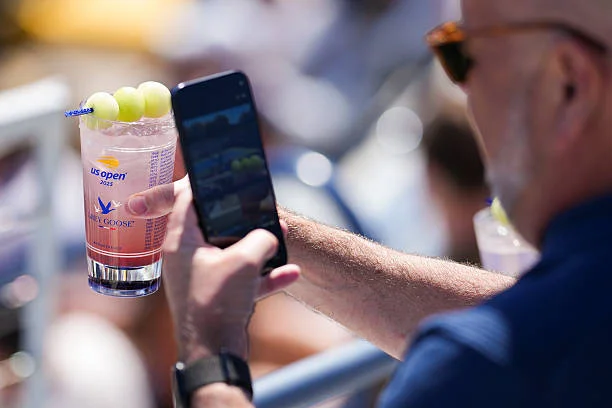


The Honey Deuce, sold at $23, has become more than a drink. It now forms part of the US Open experience, and by extension, part of the tournament’s commercial identity.
2. Sponsorship
The US Open holds one of the strongest sponsorship portfolios in sport, with more than 30 partners. Its biggest and most prominent corporate partners include global brands such as American Express, Chase, Emirates, Rolex, IBM, Ralph Lauren, and Deloitte.
In 2024 alone, the tournament generated an estimated $118 million in sponsorship revenue. The secret in US Open large portfolios lies in offering sponsors marketing rights, customer activations, advertising opportunities, and access to an audience of sports fans, affluent consumers, corporate executives, tourists, and international viewers.
This approach helps sponsors create meaningful connections with fans while generating long-term value for the tournament.
3. Broadcast Rights
Media rights represent one of the most valuable assets in the US Open business model. ESPN owns the tournament’s exclusive domestic broadcast rights. The new 12-year agreement signed in 2026 that runs through 2037 worth $170 million annually. The deal marks a sharp increase from the previous agreement’s estimated $75–77 million per year.
In the UK and Ireland, Sky Sports is close to extending its deal through 2030.These agreements guarantee predictable revenue and expand the tournament’s global reach.
4. The New York Domino Effect
No sporting event operates in a vacuum. The US Open benefits from its location in New York City, one of the world’s most influential commercial hubs. The New York Effect gives the tournament direct access to US celebrities, global stars, multinational brands, tourists, media organizations, and corporate executives. These advantages help the US Open command premium ticket prices and attract sponsors willing to invest heavily in the event.
The result is a tournament that extends beyond sport and becomes part of New York’s economy. The USTA estimates that the three-week US Open creates more than $1.2 billion in annual economic impact for New York City.
Why the US Open Sits Ahead of Other Grand Slams Commercially
The US Open positions itself as more than a tennis tournament. It has evolved into an event that blends sport, fashion, music, celebrity culture, hospitality, and fan experience.
First, unlike Wimbledon’s strict “clean court” aesthetic, the US Open gives sponsors greater visibility and more room to activate around the event, making it one of the most attractive sponsorship properties in tennis.
The US Open’s mixed doubles format also sets it apart from other Grand Slams. Mixed doubles historically struggled to attract attention compared to singles competitions. In response, the US Open revamped the format, featuring high-profile singles stars and condensing the event into two days during Fan Week. This change has driven attendance, engagement, participation, and commercial value. In 2026, the draw featured the return of Serena Williams alongside stars like Carlos Alcaraz, Novak Djokovic, and Aryna Sabalenka, and every ticket sold out.

ESPN2 averaged 363,000 viewers, up 138% over 2025 during Tuesday’s Mixed Doubles coverage. Viewership peaked at 502,000 during the Carlos Alcaraz/Serena Williams vs. Belinda Bencic/Flavio Cobolli match.
The third is the US Open Fan Week. US Open Fan Week takes place a week before the main tournament. It lets fans watch player practices, enjoy entertainment and special events, and collect free giveaways such as custom tennis balls, stadium cushions, phone charms, hand fans, hats, and sunscreen. The experience keeps fans engaged and draws them to the grounds a full week before the main draw begins.

During 2026 Fan Week, US Open digital platforms generated more than 6.3 million visits and 42.3 million page views (up 35% year-over-year), along with 711 million social media interactions.
Finally, the US Open embraced the creator economy. Sports content now thrives through short-form videos, highlights, and social media storytelling. In 2026, the US Open expanded its influencer program to 100 creators, up from 54 in 2025. Many of those creators focus on fashion, food, health, and lifestyle rather than match coverage. The strategy is to broaden the tournament’s appeal beyond traditional tennis fans and reach audiences that traditional tennis media often misses.
Together, tennis, entertainment, culture, celebrity appeal, and fan engagement have created a product that extends well beyond the matches themselves.
Lessons From the Business of the 2026 US Open
1. Build multiple revenue streams.
The US Open doesn’t rely on ticketing alone. Media rights, sponsorship, hospitality, licensing, merchandise, food and beverage, and digital products all monetize different parts of the same audience.If you run a business connected to sport, platforms like BallBridge offer a marketplace to list your products and connect with the wider sports industry.
2. Maximize every product.
Mixed doubles sat as an underused commercial asset until the US Open revamped, rebranded, and repositioned it. This means every asset can create value when marketed correctly.
3. Give sponsors something to activate.
Sponsors want more than visibility or a logo beside the tournament name. They want access, activations, and interaction with the audience, and that keeps brands coming back and staying longer.
American Express, for example, has partnered with the tournament since 1994, offering cardholder experiences, lounges, shopping, and other fan activations.
JPMorgan Chase, which has sponsored the tournament for 44 years, has dedicated space for clients, including private meeting areas and uses the tournament as a relationship-building platform.
“It is truly a great opportunity for us to engage fans and customers, as well as host clients over the course of the tournament,” said a spokesperson for the banking giant.
Watch the BallBusiness podcast interview with Nandi Buthelezi, Sponsorship Manager at PUMA South Africa, on how to position your event as a sponsorship asset.
4. Reinvest in the product.
This may be the most important lesson. In 2026, the USTA invested $800 million into Arthur Ashe Stadium and the broader Billie Jean King National Tennis Center. This redevelopment added 2,000 courtside seats and increased the total courtside capacity from 3,000 to 5,000. The project also introduced two luxury suite levels and expanded the promenade-level concourse by 40%. More seating means more revenue.More spaces mean more revenue into the pocke
Conclusion
In conclusion, the US Open ranks among the largest sporting events in the world, with its business and prestige extending far beyond the courts of Flushing Meadows. The US Open generates revenue from a variety of sources, including ticket sales, sponsorships, media rights, hospitality, licensing, merchandise, digital content, and fan experiences.
Additionally, the US Open is not just about selling tennis. It offers a comprehensive experience that includes hospitality, sponsorship opportunities, tourism, and entertainment, making it appealing to both tennis fans and casual visitors alike. These strategies have transformed what appears to be a 15-day tennis tournament into the most commercially successful tournament in the sport.
For sports organizations, event owners, and business leaders, the US Open serves as a clear blueprint for sustainable growth in the modern sports industry.
- https://www.forbes.com/sites/brettknight/2026/08/28/2026-us-open-tennis-by-the-numbers/ ↩︎
- https://www.usopen.org/en_US/visit/prize_money ↩︎
